Two ME professors received the 2018 National Science Foundation’s CAREER award, which is the Foundation’s most prestigious award in support of early-career faculty.

Prof. Xu Chen’s award will support his research on thermal modeling, sensing, and controls to enable new generations of powder bed fusion (PBF) additive manufacturing. In contrast to conventional machining, where parts are made by cutting away unwanted material, additive manufacturing — also called 3D printing — builds three-dimensional objects of unprecedented complexity by progressively adding small amounts of material. PBF is a popular form of AM for fabricating complex metallic or high-performance polymer parts. This CAREER project will create new knowledge critical for substantially higher accuracy and greater reproducibility in PBF and AM. Building on innovations to model and control the thermal mechanical process, the research will illuminate ways to mitigate quality variations on the fly, and provide new feedback-centric control paradigms to engineer the layered deposition of thermal energy, which is imperative for quality and reproducibility. PBF parts are increasingly preferred in applications ranging from advanced jet-engine components to custom-designed medical implants. The outcomes of this project will facilitate fabrication of products to benefit the US economy and improve quality of life. More broadly, methods and tools developed from this research has the potential to drastically impact the manufacturing of a wide range of components for the energy, aerospace, automotive, healthcare, and biomedical industries that can benefit from short-run high-quality production.
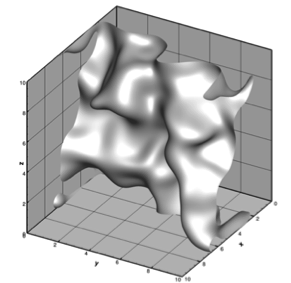
Prof. Norato’s award will support fundamental research to formulate a design framework to systematically incorporate geometric design rules and manufacturing cost considerations into the computational design of structures. In particular, the techniques advanced in this project belong to a group of techniques called topology optimization, in which a computer program finds the optimal shape of a structural component or an architected material. This research will enable the conceptual design and optimization of lightweight, high-performance, and economically-viable structures with applications across a wide range of engineering industries. The new design capabilities will have the potential to significantly reduce manufacturing and R&D costs and thereby increase the economic competitiveness of American manufacturers. Prof. Norato is also a recipient of the 2017 ONR Young Investigator Award.
Both awards are for five years and approximately $500,000 (minimum), and have an outreach component towards K-12 students and people from underrepresented communities.

 Dr. George Lykotrafitis and his student Kostyantyn Partola have been featured for their development of a device that tests blood viscosity – an important indicator of heart health. Kostyantyn has had support from the Accelerate UConn program as well as the Connecticut Center for Entrepreneurship and Innovation Fellowship program to support the commercialization of the technology. More information on their work can be found at UConn Today: