Research

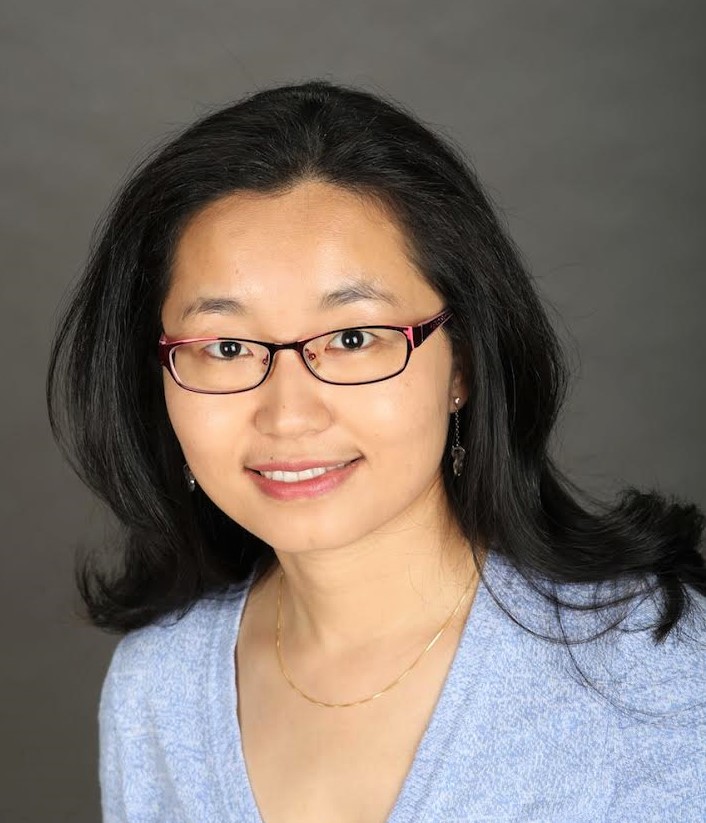
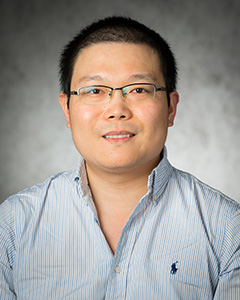
Xinyu Zhao and Ying Li receive the prestigious NSF CAREER award

Two ME professors received the 2020 National Science Foundation’s CAREER award, which is the Foundation’s most prestigious award in support of early-career faculty.

Prof. Xinyu Zhao’s 500k CAREER award focuses on developing a fundamental understanding of flame extinction, which plays a central role in promoting energy security, environmental sustainability, air-travel safety and opportune fire suppression. Droplets, such as fuel sprays in aeronautical combustors and water droplets in pollutant reduction or fire suppression, are ubiquitous in practical combustion systems. When interacting with an established gaseous flame, droplets introduce additional mechanisms to extinguish a flame, through physical processes such as vaporization, dilution, subsequent reactions, modulation of turbulence, and radiative heat transfer. Through this project, Prof. Zhao will investigate the fundamental understanding and develop quantitative descriptions of key factors governing the flame extinction process in presence of droplets. 

The 592k CAREER award received by Prof. Ying Li will support fundamental research to understand complex mechanical behaviors of thermoplastic elastomers (TPEs). Biodegradable TPEs have the great potential to be used as protective coatings for cell phones, artificial muscles for soft robotics, and polymer electrolytes for batteries. This research project aims to understand and quantify the link between synthesis, microstructure, and mechanical property of TPEs, with the help of multi-scale computational modeling, machine learning, and experimental validation. With tailored mechanical properties, these biodegradable and environment-friendly TPEs can be widely used further to enable an array of novel structural and device applications, alleviating the plastic pollution crisis.

Buzzing Through the Blood-Brain Barrier

Prof. Thanh Nguyen’s research group has reported on the first biodegradable ultrasonic transducer that can help medication move from blood vessels into brain tissues and circumvent the body’s traditional defense mechanisms.The work is published in the journal of PNAS (Proceeding of National Academy of Science) (Dec 2019), and the two first authors of this paper are PhD students in Nguyen lab, namely Thinh Le and Eli Curry.

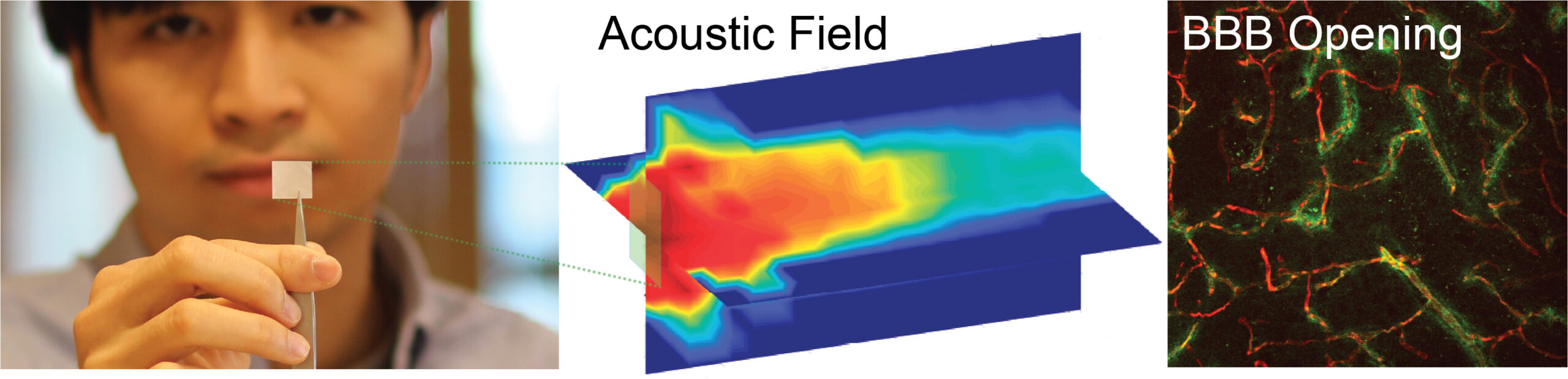
A PLLA piezoelectric nanofiber film (left) to generate an acoustic wave (middle) that can open the blood-brain barrier (BBB) (right) to deliver medicines into the brain tissue.

When implanted into the brain, this novel device can generate ultrasonic waves for buzzing drugs through the blood-brain barrier (BBB) to treat brain diseases (e.g. cancers), and then self-vanish, avoiding the need of invasive removal surgery that is often required for conventional medical implants. More details can be found in the UConn Today article.

Fueling the Fire: Studying Flame Behavior to Improve Combustion Systems

The power you feel underneath you when you’re on a plane as it takes off is tremendous. The physics that enable the remarkable feat of lifting a 175,000-pound midsize commercial aircraft into the sky and keeping it there are just as incredible – and complicated.

There are four components to a commercial aircraft gas turbine engine: the fan that produces most of the thrust, the compressor, which compresses the incoming air, the combustor which burns the fuel to create high-energy gas, and the turbine that produces work from that gas to power the fan and exhaust to produce additional thrust.

The challenge in this system is keeping the flame in the combustor burning. Flame blowoff can occur when the air flow speed is very high, or the fuel-air mixture is weak so that the flame cannot be stabilized, so it moves downstream and eventually extinguishes itself.

University of Connecticut professor of mechanical engineering, Baki Cetegen has received $320,000 from the National Science Foundation to study this problem by investigating how different fuels and high levels of flow turbulence affect the occurrence of flame blowoff.

Read more on UConn Today

A new, nature-inspired self-healing rubber developed by Prof. Li and his collaborators from USC.

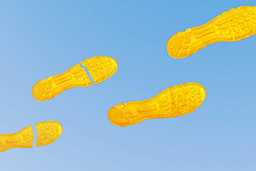
A severed 3D-printed shoe pad repairing itself (Submitted Photo/An Xin and Kunhao Yu)

A new paper published by Prof. Ying Li and his collaborators from University of Southern California in NPG Asia Materials provide the details of a new class of self-healing rubber that is inspired by the healing of natural tissues.

For more details, please see the news article from UConn Today.


Dan Wang and Professor Xu Chen win Best Paper Award at the 2018 International Symposium on Flexible Automation

ME graduate student Dan Wang and Professor Xu Chen won the Best Paper (Theory) of the 2018 International Symposium on Flexible Automation (ISFA) for their paper titled “Synthesis and Analysis of Multirate Repetitive Control for Fractional-order Periodic Disturbance Rejection in Powder Bed Fusion.”

The ISFA started in 1986 under the co-sponsorship of the American Society of Mechanical Engineers (ASME) and the Institute of Systems, Control and Information Engineers (ISCIE) in Japan. The symposium focuses on automation technologies that are essential to meet the increasing requirements of modern manufacturing and other related fields, such as dynamical systems, robotics, logistics, biomedical systems, and healthcare systems.

The 2018 symposium was held in Kanazawa, Japan from July 15 to July 19. Every year the symposium recognizes two best papers appearing in the Proceedings and presented at the Symposium. One award emphasizes contribution to theory, and the other emphasizes significant or innovative applications/practice. Criteria for selection include the quality of the written and oral presentation, the technical contribution, timeliness, and practicality. Each award consists of a certificate and an honorarium of $1,000.

Wang and Chen’s paper discusses control approaches to advance the quality of repetitive energy deposition in powder bed fusion (PBF) additive manufacturing, pertaining specifically to the repetitive deposition of the laser or electron beam energy. It addresses an intrinsic limitation in control schemes that can leverage the periodicity of task patterns to significantly improve system performance. The long-term impacts will include greater quality assurance of the manufactured parts, new capabilities for large-scale 3D printing of extreme materials, and smarter machines and automation in additive manufacturing processes.

Profs. Chen and Norato win coveted 2018 NSF CAREER awards for their work on Additive Manufacturing and Topology Optimization

Two ME professors received the 2018 National Science Foundation’s CAREER award, which is the Foundation’s most prestigious award in support of early-career faculty.

Prof. Xu Chen’s award will support his research on thermal modeling, sensing, and controls to enable new generations of powder bed fusion (PBF) additive manufacturing. In contrast to conventional machining, where parts are made by cutting away unwanted material, additive manufacturing — also called 3D printing — builds three-dimensional objects of unprecedented complexity by progressively adding small amounts of material. PBF is a popular form of AM for fabricating complex metallic or high-performance polymer parts. This CAREER project will create new knowledge critical for substantially higher accuracy and greater reproducibility in PBF and AM. Building on innovations to model and control the thermal mechanical process, the research will illuminate ways to mitigate quality variations on the fly, and provide new feedback-centric control paradigms to engineer the layered deposition of thermal energy, which is imperative for quality and reproducibility. PBF parts are increasingly preferred in applications ranging from advanced jet-engine components to custom-designed medical implants. The outcomes of this project will facilitate fabrication of products to benefit the US economy and improve quality of life. More broadly, methods and tools developed from this research has the potential to drastically impact the manufacturing of a wide range of components for the energy, aerospace, automotive, healthcare, and biomedical industries that can benefit from short-run high-quality production.

Prof. Norato’s award will support fundamental research to formulate a design framework to systematically incorporate geometric design rules and manufacturing cost considerations into the computational design of structures. In particular, the techniques advanced in this project belong to a group of techniques called topology optimization, in which a computer program finds the optimal shape of a structural component or an architected material. This research will enable the conceptual design and optimization of lightweight, high-performance, and economically-viable structures with applications across a wide range of engineering industries. The new design capabilities will have the potential to significantly reduce manufacturing and R&D costs and thereby increase the economic competitiveness of American manufacturers. Prof. Norato is also a recipient of the 2017 ONR Young Investigator Award.

Both awards are for five years and approximately $500,000 (minimum), and have an outreach component towards K-12 students and people from underrepresented communities.