When Robert Valley Sr. entered the doors of Castleman in 1946, he did not know that he was starting a legacy. Now – almost 70 years later – three members of the family have walked through those doors and graduated in 1950, 1978 and 1981. And another generation is expected to graduate in May of 2016.
This is one of the Legacy Families that the School of Engineering is trying to find and chronicle – families that return to UConn’s School of Engineering and consider it home. (Contact information below.)

From left to right: Robert Valley Sr., Stephen Mierz, and Matt Mierz
For Robert Sr., engineering seemed natural. He had always wanted to be an engineer. “Early on, I got into ham radios,” he said. “It was fascinating to have a piece of block and a coil and some headphones and tune into your local radio station.” Those days of tinkering were a great time for people with an engineering bent. But today’s devices are too complex, said the Branford resident. “You can’t even take them apart and understand what’s inside. The circuitry is not accessible.”
His son, Robert Valley Jr., chief engineer with Branford-based Analytica, recently acquired by PerkinElmer, felt the same affinity for Engineering. “It just seemed to be the appropriate path,” said the man who started his own business at age 15. Bob Jr. created “Rapid Robert’s Repair Services,” during a summer vacation to fix tape recorders for SoundScriber Corp., then his father’s company. From there, the path was natural. Bob Jr. graduated from UConn with a degree in Electrical Engineering in 1978 without even discussing it with his father, the men said.
The legacy does not stop there. Robert Sr.’s daughter Diane met her future husband Stephen Mierz here at UConn. He graduated in 1981 with a Mechanical Engineering and Materials Engineering degree. Steve caught the engineering bug from his father, who did engineering work, but did not have a degree. His father encouraged Steve to pursue his degree so that he would have more career options.
Taking his father’s advice, he attended Engineering career fairs and met with Sikorsky, where he has worked ever since. He now handles forensic engineering, inspecting brakes, wheels and other parts that have failed, and figures out how each failure occurred. “At the end of the day, to be contributing to something that makes the company more successful, that’s a good feeling,” he said. “Money’s good, but I think you need to have job satisfaction that makes every day interesting and fun.”
Steve’s worn a lot of different hats at Sikorsky, and advises his son and other UConn Engineering students to be adventurous and flexible. “Be open to things at whatever company you go to,” he said. “Don’t decide that you’re going to do just one thing. Be open to possibilities. There is a lot of neat stuff that you can do, especially if you go to a big company.”
His son, Matt Mierz, who’s carrying on the family legacy at UConn, is scheduled to graduate next year with a degree in Mechanical Engineering. Matt said he and the elder engineers in his family will occasionally talk about how the field has changed, and how much the UConn Engineering School has expanded. His interest in engineering includes cars and motorcycles. “I went into it because I enjoyed it.”
The UConn School of Engineering is proud of the families making engineering a part of their family tradition. Alumni and students who are the children, grandchildren, parents, grandparents or siblings of School of Engineering graduates are legacies. Please keep in touch with your School and confirm your legacy status with the Director of Engineering Alumni Relations, Heidi Douglas (hdouglas@engineer.uconn.edu). We hope to hear from you.
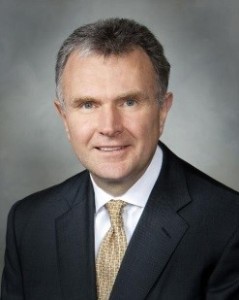
 dynamic systems and controls to advance the technology development in advanced manufacturing, mechatronics, robotics, precision engineering, system and optimization, and human-machine interactions. He has worked closely with the precision control and information storage industries, and helped Western Digital Corporation develop multiple new servo designs for industrial mass production. Dr. Chen is a recipient of the Young Investigator Award in 2014 ISCIE / ASME International Symposium on Flexible Automation and the 2012 Chinese Government Award for Outstanding Students. He received his Ph.D. from UC Berkeley in 2010 and 2013, respectively.
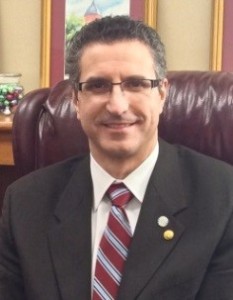
 joins the Mechanical Engineering department. His current research interests lie in incorporating localized failure mode criteria (such as stress and fatigue), as well as manufacturing, cost and geometric constraints in topology and shape optimization for the design exploration of structures and materials, with the aim of exploring efficient structures tailored to a specific manufacturing process. Prior to joining our department, he was responsible for the Product Optimization group at Caterpillar, where he and his team researched numerical methods and developed computational tools for structural and multidisciplinary optimization. He earned his Ph.D from the University of Illinois at Urbana-Champaign in 2005.
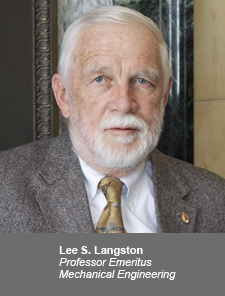
 micro-assembly approaches, magnetics, microfluidics, cell and tissue mechanics, regenerative medicine, cryopreservation, and cell-based diagnostics for point-of-care. Dr. Tasoglu’s achievements in research and teaching have been recognized by fellowships and awards including Chang-Lin Tien Fellowship in Mechanical Engineering, Allen D. Wilson Memorial Scholarship, and UC Berkeley Institute Fellowship for Preparing Future Faculty. His work has been featured as the cover of Advanced Materials, Small, Trends in Biotechnology, and Physics of Fluids and highlighted in Nature Medicine, Boston Globe, Reuters Health, and Boston Magazine. He received his Ph.D. in 2011 from UC Berkeley.
 The four-day competition brings together teams of university undergraduate and graduate students from around the world to conceive, design, fabricate and compete with a small, formula style, competition vehicle. To give teams the maximum design flexibility and the freedom to express their creativity and imagination, there are very few restrictions on the overall vehicle design. Teams typically spend eight to twelve months designing, building and preparing their vehicles before a competition.