Web cookies (also called HTTP cookies, browser cookies, or simply cookies) are small pieces of data that websites store on your device (computer, phone, etc.) through your web browser. They are used to remember information about you and your interactions with the site.
Purpose of Cookies:
Session Management:
Keeping you logged in
Remembering items in a shopping cart
Saving language or theme preferences
Personalization:
Tailoring content or ads based on your previous activity
Tracking & Analytics:
Monitoring browsing behavior for analytics or marketing purposes
Types of Cookies:
Session Cookies:
Temporary; deleted when you close your browser
Used for things like keeping you logged in during a single session
Persistent Cookies:
Stored on your device until they expire or are manually deleted
Used for remembering login credentials, settings, etc.
First-Party Cookies:
Set by the website you're visiting directly
Third-Party Cookies:
Set by other domains (usually advertisers) embedded in the website
Commonly used for tracking across multiple sites
Authentication cookies are a special type of web cookie used to identify and verify a user after they log in to a website or web application.
What They Do:
Once you log in to a site, the server creates an authentication cookie and sends it to your browser. This cookie:
Proves to the website that you're logged in
Prevents you from having to log in again on every page you visit
Can persist across sessions if you select "Remember me"
What's Inside an Authentication Cookie?
Typically, it contains:
A unique session ID (not your actual password)
Optional metadata (e.g., expiration time, security flags)
Analytics cookies are cookies used to collect data about how visitors interact with a website. Their primary purpose is to help website owners understand and improve user experience by analyzing things like:
How users navigate the site
Which pages are most/least visited
How long users stay on each page
What device, browser, or location the user is from
What They Track:
Some examples of data analytics cookies may collect:
Page views and time spent on pages
Click paths (how users move from page to page)
Bounce rate (users who leave without interacting)
User demographics (location, language, device)
Referring websites (how users arrived at the site)
Here’s how you can disable cookies in common browsers:
1. Google Chrome
Open Chrome and click the three vertical dots in the top-right corner.
Go to Settings > Privacy and security > Cookies and other site data.
Choose your preferred option:
Block all cookies (not recommended, can break most websites).
Block third-party cookies (can block ads and tracking cookies).
2. Mozilla Firefox
Open Firefox and click the three horizontal lines in the top-right corner.
Go to Settings > Privacy & Security.
Under the Enhanced Tracking Protection section, choose Strict to block most cookies or Custom to manually choose which cookies to block.
3. Safari
Open Safari and click Safari in the top-left corner of the screen.
Go to Preferences > Privacy.
Check Block all cookies to stop all cookies, or select options to block third-party cookies.
4. Microsoft Edge
Open Edge and click the three horizontal dots in the top-right corner.
Go to Settings > Privacy, search, and services > Cookies and site permissions.
Select your cookie settings from there, including blocking all cookies or blocking third-party cookies.
5. On Mobile (iOS/Android)
For Safari on iOS: Go to Settings > Safari > Privacy & Security > Block All Cookies.
For Chrome on Android: Open the app, tap the three dots, go to Settings > Privacy and security > Cookies.
Be Aware:
Disabling cookies can make your online experience more difficult. Some websites may not load properly, or you may be logged out frequently. Also, certain features may not work as expected.
Prof. Ying Li is in a selected small group of researchers that have received the prestigious Young Investigator Award from the Air Force Office of Scientific Research (AFOSR).
His award will support de novo design of thermosetting polymers with deep reinforcement learning, and will provide new capabilities needed to avoid the traditionally used trial and error approaches and perform rational design to discover novel, yet predictable combinations of properties for cutting-edge thermosetting polymers.
This past January, the University of Connecticut School of Engineering held the Women in STEM Frontiers in Research Expo (WiSFiRE), which brought together and celebrated some of the important research and journeys of female faculty in the School of Engineering. The conference was co-organized by our own Prof. Anna Tarakanova.
Prof. Thanh Nguyen receives the highly regarded ACell Young Investigator Faculty Award at the 2020 Regenerative Medicine Workshop, which brings together leading experts from across the expansive field of regenerative medicine. Prof. Nguyen will deliver a keynote speech along with other world renowned researchers in the field of regenerative medicine during the event, which will take place at the Wild Dune Resort, South Carolina, in March 2020.
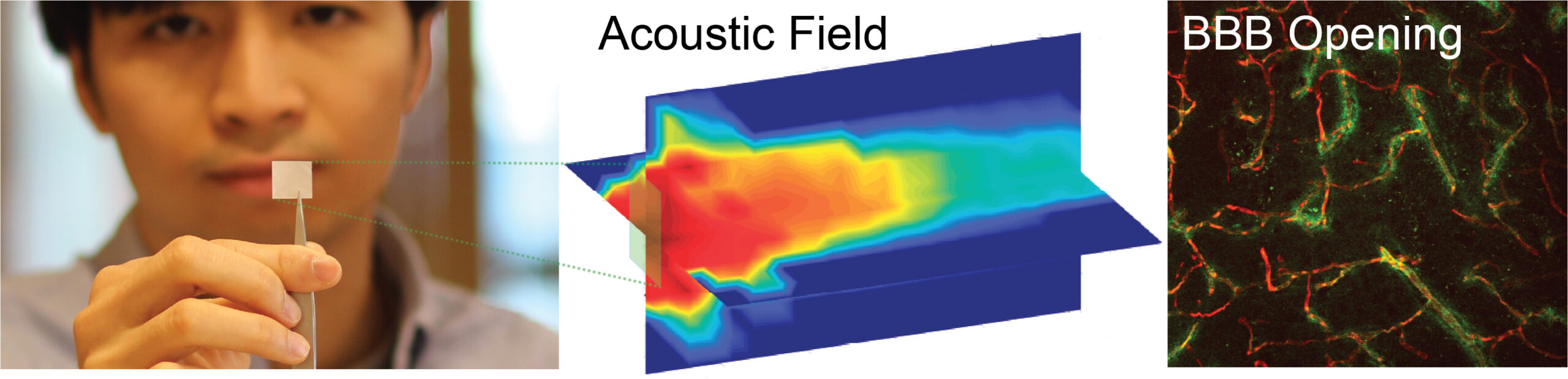
Prof. Thanh Nguyen’s research group has reported on the first biodegradable ultrasonic transducer that can help medication move from blood vessels into brain tissues and circumvent the body’s traditional defense mechanisms.The work is published in the journal of PNAS (Proceeding of National Academy of Science) (Dec 2019), and the two first authors of this paper are PhD students in Nguyen lab, namely Thinh Le and Eli Curry.
A PLLA piezoelectric nanofiber film (left) to generate an acoustic wave (middle) that can open the blood-brain barrier (BBB) (right) to deliver medicines into the brain tissue.
When implanted into the brain, this novel device can generate ultrasonic waves for buzzing drugs through the blood-brain barrier (BBB) to treat brain diseases (e.g. cancers), and then self-vanish, avoiding the need of invasive removal surgery that is often required for conventional medical implants. More details can be found in the UConn Today article.
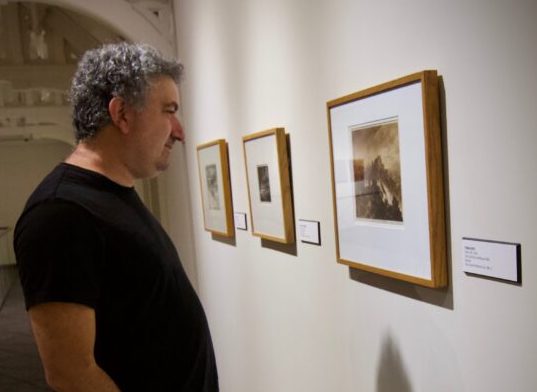
George Matheou and his exhibit at the William Benton Museum of Art. (UConn Photo/Eli Freund)
By: Alexandra Meropoulos, Student Written Communications Specialist, UConn School of Engineering
Art and science are two fields that appear to be worlds apart at first glance, but according to George Matheou, assistant professor of mechanical engineering, the intersection between the two are actually extremely important. This notion became the inspiration behind his art exhibit called Fluid Dynamics in Art and Nature at the William Benton Museum of Art.
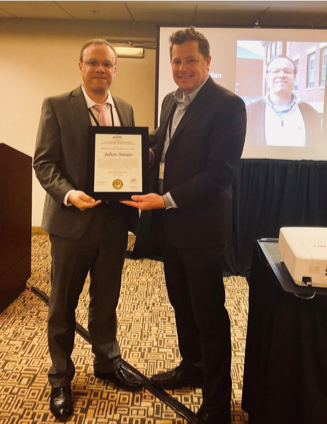
During the 45th Annual Design Automation Conference, held by the American Society of Mechanical Engineers (ASME) this past summer, Mechanical Engineering Professor Julián Norato has been awarded the prestigious Design Automation Young Investigator Award.
Prof. Norato receiving the award from Prof. Chris Mattson on behalf of the Design Automation Committee
This award is given once each year “to recognize an outstanding young investigator who is making noteworthy contributions in the area of design automation, including research in design representation, design optimization, design evaluation, and/or design integration.” The award was presented at the ASME’s Design Automation Conference, which was held on August 18-21, 2019 in Anaheim, California. This conference brings together every year international experts in the field of design automation.
Norato was given this award based on the work and research he has done in topology optimization. Topology optimization is a computational methodology to automatically design parts to maximize structural strength with minimal amounts of material in the most efficient and effective way. A major focus of Norato’s research group is to do the topology optimization employing exclusively certain shapes, like bars or plates, that make manufacturing with conventional processes easier.
An example of the work Norato does with topology optimization
Prof. Christopher Mattson presented the award to Prof. Norato “in recognition of his expertise in topology optimization, specifically his advances in stress-based topology optimization and development of the geometry projection method” and to “recognize his continuous and dedicated service to the Design Automation Conference and his outreach to the community.”
Our own Prof. Lee Langston helped Apollo 11 make history by being part pf the team designing the fuel cells that powered Apollo 11 to the moon and the return trip to Earth.
Our own Prof. Lee Langston helped Apollo 11 make history by being part pf the team designing the fuel cells that powered Apollo 11 to the moon and the return trip to Earth.
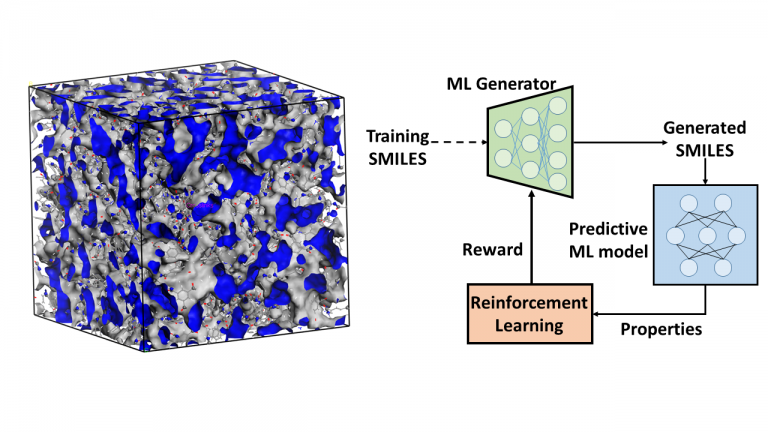 His award will support de novo design of thermosetting polymers with deep reinforcement learning, and will provide new capabilities needed to avoid the traditionally used trial and error approaches and perform rational design to discover novel, yet predictable combinations of properties for cutting-edge thermosetting polymers.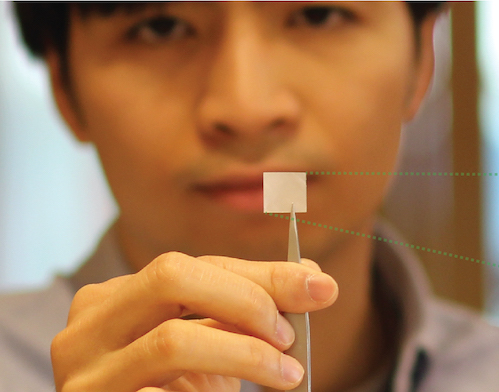

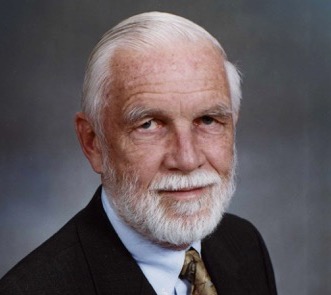
 Our own Prof. Lee Langston helped Apollo 11 make history by being part pf the team designing the fuel cells that powered Apollo 11 to the moon and the return trip to Earth.