Faculty News

New technology from Prof. Thanh Nguyen published in Science

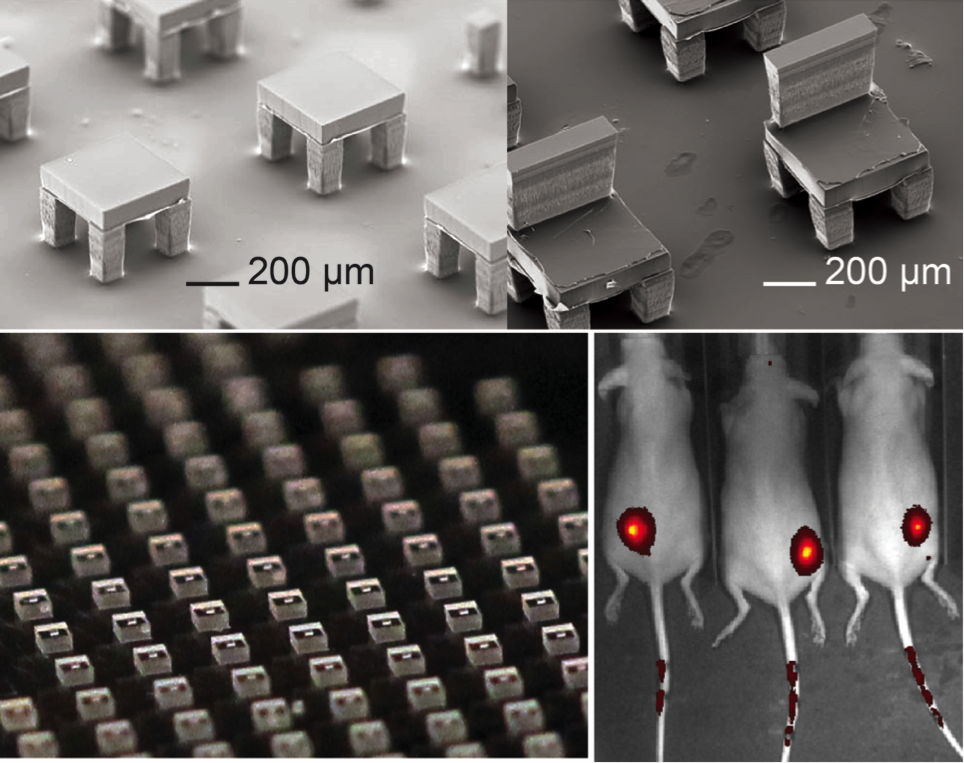
The latest issue of Science features a new technology invented and developed by our very own assistant professor Dr. Thanh D. Nguyen. Prof. Nguyen’s brainchild, developed during his postdoc with Prof. Robert Langer at MIT, offers the latest advance in 3D manufacturing for microstructures of biomaterials: StampEd Assembly of polymer Layers, or SEAL for short. The reliance of current 3D printing techniques on potentially toxic impurities (e.g. UV-curing agents) for formulating printable inks poses clear problems for bio and medical applications. SEAL, on the other hand, can create nearly any 3D micro-objects of pure biopolymers (e.g. polymers used for surgical sutures) with complex geometries and at high resolution. Such enhanced biocompatibility of fabricated 3D microstructures for medical applications enables a broad scope of exciting new possibilities. For example, Prof. Nguyen along with other researchers at MIT used SEAL to create 3D core-shell micro-particles containing biological cargos (e.g. vaccines), which can be programed to sequentially release at different times or even at specific locations within the body. The compelling implications of this technique include the potential for a new set of single-injection vaccines/drugs, which could avoid the repetitive, painful, expensive, and inconvenient injections often required to administer vaccines and drug therapies like insulin or growth hormone. To view the article, click here


Emeritus Prof. Lee Langston goes to Italy with the ASME History & Heritage Committee

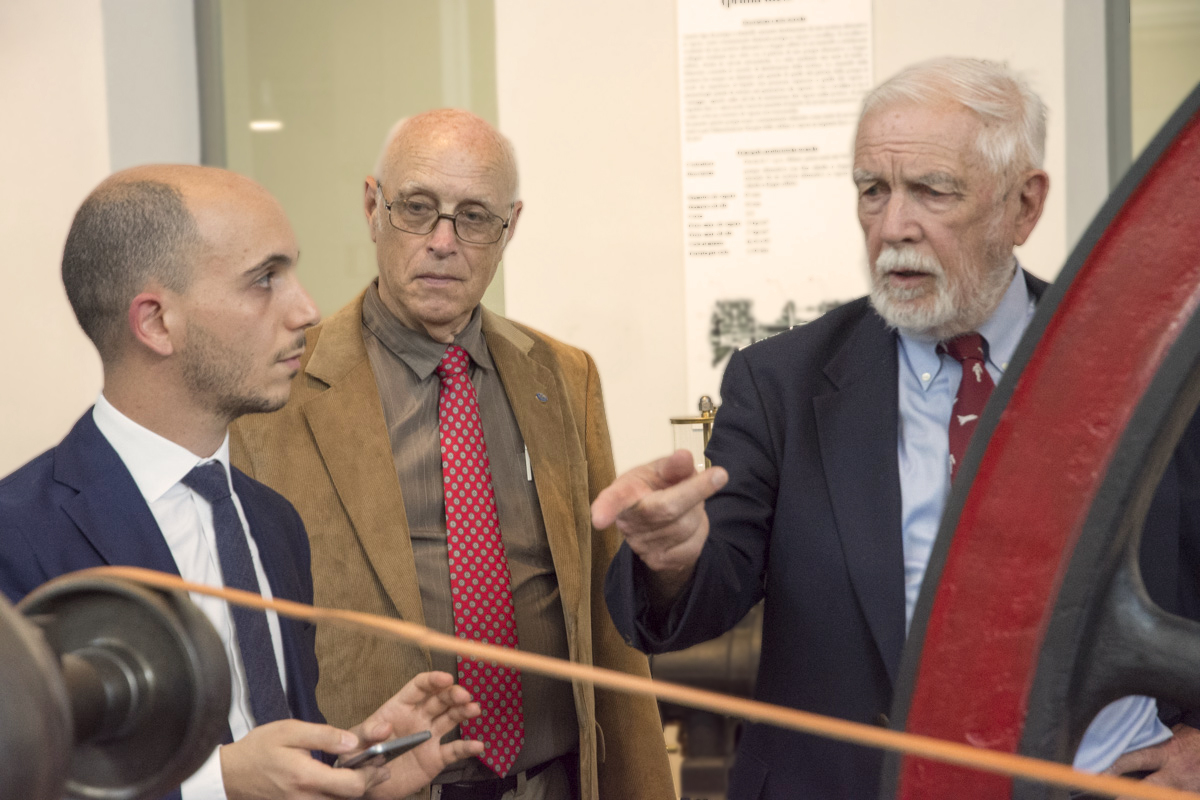
Professor Emeritus Lee Langston, a member of the ASME History & Heritage Committee, recently traveled to Palermo, Italy, to represent UConn and ASME at the ceremony recognizing the engine collection housed within the University of Palermo’s Museum of Engines and Mechanisms.

From left to right: Giuseppe Genchi, Terry Reynolds, and Lee Langston. Photo by ASME/Wil Haywood.

More details can be found on the ASME website.

Since the invention of the wheel, mechanical innovation has critically influenced the development of civilization and industry as well as public welfare, safety and comfort. Through its History and Heritage program, ASME encourages public understanding of mechanical engineering, fosters the preservation of this heritage and helps engineers become more involved in all aspects of history.

Professor Emeritus Lee Langston is actively involved in the committee’s ASME Landmark program. Historic Mechanical Engineering Landmarks are existing artifacts or systems representing a significant mechanical engineering technology. They generally are the oldest extant, last surviving examples typical of a period, or they are machines with some unusual distinction. Over 270 Landmarks have been designated.


Lee Langston Receives ASME Sawyer Award

By Kristi Allen

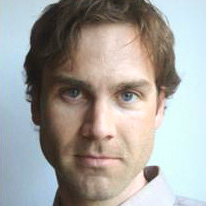
Mechanical Engineering professor emeritus Lee Langston is the 2015 recipient of the R. Tom Sawyer Award presented by the American Society of Mechanical Engineers. The Sawyer award is conferred on an individual “who has made important contributions to the toward the advancement of the gas turbine industry.” Forty-three men from all over the world have received the award, which is a major industry honor. leepic

In his 30 year career at Pratt & Whitney and UConn, Langston pioneered the measurement, understanding and prediction of secondary flow in gas turbines, or jet engines. His research in gas turbine flows is known collectively as the Langston cascade. He has also authored more than 75 scholarly journal articles and holds one patent. “I started working on the problem [of complicated flows in gas turbines] in 1974…All the work is still referred to,” said Langston. The R. Tom Sawyer award is closely tied to the history of the gas turbine engine. The award was named for Robert Thomas Sawyer, an earlier pioneer in the industry who founded the ASME’s International Gas Turbine Institute, which grants the award.

Langston has been involved with the International Gas Turbine Institute since 1974, serving as a member of the board of directors several times and as vice president between 1997 and 2000. The list of Sawyer award recipients includes English engineer Sir Frank Whittle and German physicist Hans von Ohain, the two men credited with independently developing the first jet engines in the late 1930’s. “I’m honored to be included on the list, especially with those two men,” Langston said. The award was presented to Langston this summer at the annual International Gas Turbine Institute conference, TURBO EXPO, held this year in Montreal. Langston earned his bachelor of science in mechanical engineering at UConn in 1959 and his Ph.D. from Stanford in 1964. He returned to Connecticut and worked as a research engineer at Pratt & Whitney from 1964 until 1977 when he joined the UConn engineering faculty as an associate professor.

Langston became a full professor in 1983, served as interim dean of the School of Engineering from 1997 to 1998 and was awarded the title of professor emeritus in 2003. Langston has seen the gas turbine industry transform and grow immensely over the course of his career. The efficiency and reliability of gas turbine engines has allowed both commercial and military aviation to expand to once unimaginable places. “It’s fantastic; aviation is booming,” said Langston. “For some reason, it doesn’t get the same kind of attention that other technologies get.” Gas turbine engines cost about 10 to 20 percent of what the original aviation piston engines cost to maintain and average just one in-flight failure about every 30 years. The engines themselves have improved in efficiency over the years, creating major cost savings for airlines and making air travel affordable for the masses. There are currently almost 20,000 planes in the worldwide air transport fleet, with that number projected to grow 75 percent by 2030 . In 2011, the total aviation gas turbine engine market totalled $32 billion.

Gas turbines engines are also used in a growing number of applications on land, particularly in power plants. Langston helped bring some of this technology to UConn in the form of the co-generation power plant opened in 2006. The plant uses three gas turbine engines to generate power for the campus. They’re more efficient and environmentally-friendly than the original oil-burning engines the plant used because they use cleaner natural gas and harness both electrical energy and steam energy from a single source. “Gas turbine engines reduce CO2 emissions by almost 75 percent when they replace coal-fired power plants,” said Langston. “I was really proud to be a part of updating UConn’s power plant.” In addition to his work as a researcher and professor, Langston has also had a distinguished career as a mountain climber. Two of his most notable climbs include summiting Chimborazo Volcano in Ecuador, the farthest point from Earth’s center, and the first ascent of a peak in Pakistan known as T3 led by legendary climber Willi Unsoeld. When asked what it’s like to stand at the top of a mountain, Langston said “there’s this moment of exhilaration, but then you have to go down…

Most accidents happen on the descent.” Langston said caution has been the key to avoiding disaster during a climb. He spoke about turning around just a few hundred meters from the summit of a volcano in Ecuador which had begun to spew intense sulphuric gases. Langston and his wife continue to travel frequently. He currently writes a quarterly column and an annual review of the gas turbine industry for Mechanical Engineering magazine and serves on the ASME’s Technical Committee on Publications and Communications and the History and Heritage Committee. Langston has spent his career contributing to a field that has revolutionized global transportation and energy production, a field which looks to be no less innovative in the coming decades. He looks forward to watching the growth of the industry in the future. Published: November 18, 2015

Technologies passed down three generations


John Krenicki, Jr. (B.S. Mechanical Engineering, ’84; Hon.D.Sc. ‘07) was appointed to the board of directors of CHC Group Ltd. (HELI) and will serve as chairman. Initially, he will also serve on the company’s newly created Chairman Search Committee. Krenicki joined CD&R in 2013 after a 29-year career at General Electric. He currently serves as chairman of Wilsonart International, chairman of The ServiceMaster Company and lead director of Brand Energy & Infrastructure Services, Inc.  He holds an M.S. in Management from Purdue University. Moore Engineering, founded by Wade Moore, a recent graduate of UConn, was recently named “Murphy’s Monday Manufacturer” by U.S. Senator Chris Murphy. Moore, 23, who graduated with a degree in mechanical engineering, founded the company in 2010 after being inspired by his great-grandfather, Richard Moore, who established the well-known Moore Special Tool Company. Today, Moore Engineering is based in Milford and operates out of an 800-square-foot facility and is run by Wade with the part-time help of his three brothers. The company uses measuring and machining technologies that have been passed down three generations from Richard Moore. Manuel A. Santos (B.S. Mechanical Engineering, ‘99) was elected mayor of the City of Meriden, Connecticut in December  2013. When elected, Santos was a senior mechanical design engineer at Ultra Electronics, Measurement Systems Inc. in Wallingford, CT. Prior to that position, he was a design engineer with Ripley Tools, formerly a division of Capewell Components Co. LLC, designing innovative hand tools for the fiber optic industry.

Lee Langston In Sweden

Professor Emeritus Lee Langston Serving As Short-Term Professor In Sweden

Lee Langston, Professor Emeritus, Mechanical Engineering, is currently serving as a short-term professor at KTH, Sweden’s Royal Institute of Technology in Stockholm. The appointment takes place from Sept. 10 to Oct. 2, 2014.  He will give seminars on gas turbine technology and participate as a member of the grading committee for the disputation of a Ph.D candidate.

Meet the New Faculty For UConn Mechanical Engineering

Meet the New Faculty For UConn Mechanical Engineering

Xu Chen joins the Mechanical Engineering department. Dr. Chen’s research interests are theory and applications of dynamic systems and controls to advance the technology development in advanced manufacturing, mechatronics, robotics, precision engineering, system and optimization, and human-machine interactions. He has worked closely with the precision control and information storage industries, and helped Western Digital Corporation develop multiple new servo designs for industrial mass production. Dr. Chen is a recipient of the Young Investigator Award in 2014 ISCIE / ASME International Symposium on Flexible Automation and the 2012 Chinese Government Award for Outstanding Students. He received his Ph.D. from UC Berkeley in 2010 and 2013, respectively.

Julian Norato  joins the Mechanical Engineering department. His current research interests lie in incorporating localized failure mode criteria (such as stress and fatigue), as well as manufacturing, cost and geometric constraints in topology and shape optimization for the design exploration of structures and materials, with the aim of exploring efficient structures tailored to a specific manufacturing process. Prior to joining our department, he was responsible for the Product Optimization group at Caterpillar, where he and his team researched numerical methods and developed computational tools for structural and multidisciplinary optimization. He earned his Ph.D from the University of Illinois at Urbana-Champaign in 2005.

Savas Tasoglu joins the Mechanical Engineering department. His current research interests are complex fluid dynamics, micro-assembly approaches, magnetics, microfluidics, cell and tissue mechanics, regenerative medicine, cryopreservation, and cell-based diagnostics for point-of-care. Dr. Tasoglu’s achievements in research and teaching have been recognized by fellowships and awards including Chang-Lin Tien Fellowship in Mechanical Engineering, Allen D. Wilson Memorial Scholarship, and UC Berkeley Institute Fellowship for Preparing Future Faculty. His work has been featured as the cover of Advanced Materials, Small, Trends in Biotechnology, and Physics of Fluids and highlighted in Nature Medicine, Boston Globe, Reuters Health, and Boston Magazine. He received his Ph.D. in 2011 from UC Berkeley.

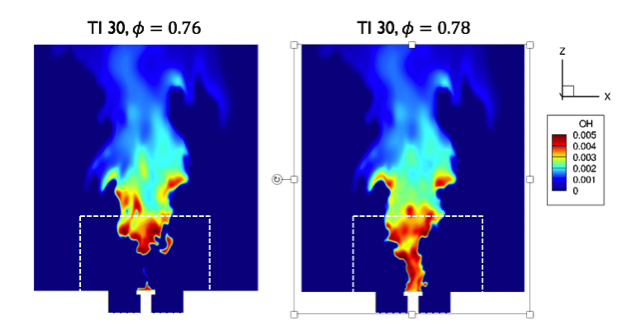
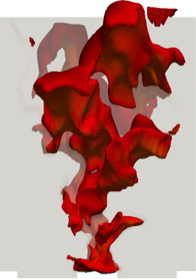
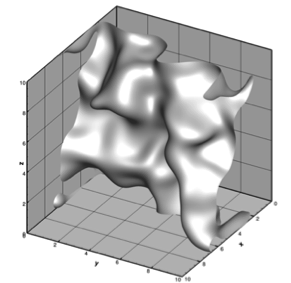
Xinyu Zhao joins the Mechanical Engineering department. Her research interests are in the area of computational fluid dynamics with a focus on high-fidelity simulations of complex reacting flows as well as heat and mass transfer in turbulent, particle laden flows. She received her Ph.D. from Pennsylvania State University in 2014.