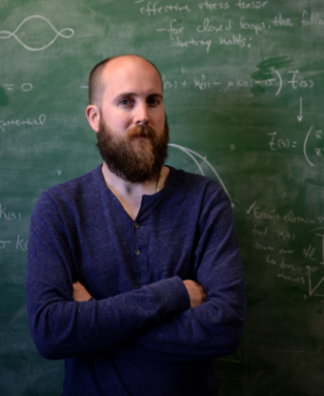
Abstract: Induced by proteins within the cell membrane or by differential growth, heating, or swelling, spontaneous curvatures can drastically affect the morphology of thin bodies and induce mechanical instabilities. In this talk, we aim to describe how the differential swelling of soft materials induces a spontaneous curvature that can dynamically shape materials. The dynamics of fluid movement within elastic networks, and the interplay between swelling and geometry play a crucial role in the morphology of growing tissues, the shrinkage of mud and moss, and the curling of cartilage, leaves, and pine cones. Small volumes of fluid that interact favorably with a material can induce a spontaneous curvature that causes large, dramatic, and geometrically nonlinear deformations and instabilities, yet, the interaction of spontaneous curvature and geometric frustration in curved shells remains still poorly understood. This talk will examine the geometric nonlinearities that occur as slender structures are exposed to a curvature-inducing stimulus – surfaces crease, fibers coalesce and curl apart, plates warp and twist, and shells buckle and snap. I will describe the intricate connection between materials and geometry, and present a straightforward means to permanently morph 2D sheets into 3D shapes. If we can engineer adaptive structures that programmatically morph on command we will enable opportunities for deployable structures, soft robotic arms, mechanical sensors, and rapid-prototyping of 3D elastomers.
Biographical Sketch: Douglas Holmes is an Assistant Professor in the Department of Mechanical Engineering at Boston University. He received degrees in Chemistry from the University of New Hampshire (B.S. 2004), Polymer Science & Engineering from the University of Massachusetts, Amherst (M.S. 2005, Ph.D. 2009), and was a postdoctoral researcher in Mechanical & Aerospace Engineering at Princeton University. Prior to joining Boston University, he was an Assistant Professor of Engineering Science and Mechanics at Virginia Tech. His group’s research specializes on the mechanics of slender structures, with a focus on understanding and controlling shape change. He received the NSF CAREER Award and the ASEE Ferdinand P. Beer and E. Russell Johnston Jr. Outstanding New Mechanics Educator award.
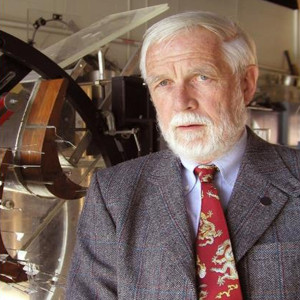


 Abstract: Blood clots are required to stem bleeding and are subject to a variety of stresses, but they can also block blood vessels and cause heart attacks and strokes. We measured the compressive response of human platelet-poor plasma (PPP) clots, platelet-rich plasma (PRP) clots and whole blood clots and correlated these measurements with confocal and scanning electron microscopy to track changes in clot structure. Stress-strain curves revealed four characteristic regions, for compression-decompression: 1) linear elastic region; 2) upper plateau or softening region; 3) non-linear elastic region or re-stretching of the network; 4) lower plateau in which dissociation of some newly made connections occurs. Our experiments revealed that compression proceeds by the passage of a phase boundary through the clot separating rarefied and densified phases. This observation motivates a model of fibrin mechanics based on the continuum theory of phase transitions, which accounts for the pre-stress caused by platelets, the adhesion of fibrin fibers in the densified phase, the compression of red blood cells (RBCs), and the pumping of liquids through the clot during compression/decompression. Our experiments and theory provide insights into the mechanical behavior of blood clots that could have implications clinically and in the design of fibrin-based biomaterials. As a second topic we will consider thermal fluctuations of lipid bilayer membranes. Typically, membrane fluctuations are analyzed by decomposing into normal modes or by molecular simulations. We propose a new approach to calculate the partition function of a membrane. We view the membrane as a fluctuating elastic plate and discretize it into triangular elements. We express its energy as a function of nodal displacements, and then compute the partition function and covariance matrix using Gaussian integrals. We recover well-known results for the dependence of the projected area of the membrane on the applied tension and recent simulation results on the dependence of membrane free energy on geometry, spontaneous curvature and tension. As new applications, we compute elastic and entropic interactions of inclusions in membranes.
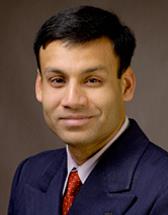
 Abstract: Multiphase flows are ubiquitous in a wide range of natural processes and engineering applications. Although efforts to compute multiphase flows started as early as the beginning of the computational fluid dynamics (CFD), the progress was rather slow mainly due to the existence of interfaces that continuously evolve in time and often undergo large deformations leading to topological changes such as breakup and coalescence. In the case of confinement, the fluid-fluid interface strongly interacts with the complex channel wall and usually involve small features such as thin liquid films that are difficult to resolve computationally. Multi-physics effects such as soluble surfactant, phase change, chemical reactions, moving contact line and viscoelasticity make the problem even more complicated and challenging for computational simulations. In this talk, I will discuss our work towards addressing these challenges. I will first describe a front-tracking method developed for particle-resolved simulations of multiphase flows, where all relevant continuum length and time scales are fully resolved in all phases. Special emphasis will be placed on treatment of soluble surfactants, viscoelasticity and phase change (droplet evaporation and burning). Sample results will be presented for various multiphase flows encountered or inspired by bio/microfluidic applications. The microfluidic applications generally involve highly laminar low Reynolds number flows but the numerical method is not restricted to low Reynolds numbers and can be directly applied to turbulent multiphase flows at moderate and even high Reynolds numbers depending on available computational resources. Sample results will also be presented about effects of soluble surfactant on weakly turbulent bubbly flows at moderate Reynolds numbers. The talk will conclude with future directions and applications of presented method to large multi-scale and multi-physics problems of practical interest.
 Christopher White, Associate Professor of Mechanical Engineering