Challenges and Achievements in Translation of Sensory Neuroprosthetics
Date: March 27, 2026; Time: 2:30 PM Location: PWEB 175
Abstract: Cochlear implants have now been used to treat >1 million patients[Zeng 2022], making this technology an exemplar for neuroprosthetic devices. Vision prosthetics, devices that restore a sense of touch, and brain-computer interfaces (BCIs) are also actively being developed by both researchers and companies. Materials research to achieve stable and high-performance microelectrodes is one critical challenge, and achieving controlled and stable electrophysiological interfaces to neural substrates is a second. Concrete examples highlighting these challenges will be introduced. The first part of my presentation will highlight materials processes to improve the electrode metallization and encapsulation materials for Utah slanted electrode arrays (USEAs), and identification of failure modes observed from long-term implantation. I start by highlighting work under the DARPA HAPTIX program where the impedances of electrodes was decreased and their stimulation stability was increased, while identifying additional materials degradation processes that still need to be resolved. This leads into outcomes from pre-clinical bench studies to evaluate the stimulation stability of fully integrated auditory nerve interface (ANI) devices. Fully integrated devices were stimulated with 6.3 billion pulses at 100 and 1200 µA collecting periodic impedance measurements, where no strong increases in impedances for electrodes were observed. This is consistent with optical and electron microscopy taken before and after stimulation, which did not show electrode damage. This transitions to electrophysiological evaluation of auditory nerve stimulation in pre-clinical large animal and human intraoperative studies. Devices maintained impedances of <140 kΩ, the functional limit we’ve imposed, for in-dwelling times up to 9 months. Evoked auditory brainstem responses and evoked compound action potentials were measured, and suggest reasonable stimulation thresholds are possible, stimulation and nerve health can be maintained, and electrodes are recruiting distinct populations of auditory nerve fibers. These data support the ANI device is sufficiently safe and effective to initiate critical perceptual testing as part of a clinical study, which starts soon.
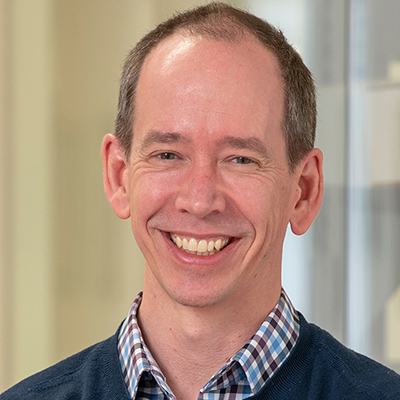
Biographical Sketch: Loren Rieth is an Associate Professor of Mechanical, Materials and Aerospace Engineering in the Benjamin M. Statler College of Engineering and Mineral Resources at West Virginia University (WVU). He leads the Microsystems and Neural Technologies Lab (MANTL) to develop neural interface technologies spanning from basic neuroscience tools to translation of technologies for human subjects. His work focuses on research, development, design, fabrication, testing, and translation of neural interface systems and implantable electronics. This includes work on electrical and optical interfaces, their underlying mechanisms, and leveraging this to improve their safety and efficacy for treating conditions and diseases. This work has been supported by grants and contracts from DARPA, NIH, DOE, NSF, and Industry, and has led to >100 publications, invited presentations, and securing IDE approvals from the FDA and German Ethics Committees for clinical investigations.
He received his BS (’94) and PhD (’01) in Materials Science and Engineering from Johns-Hopkins and University of Florida, respectively, focusing on electronic materials. He then joined the University of Utah as a post-doc to investigate epitaxial growth of III/V semiconductors. Dr. Rieth advanced to Research Associate Professor in Electrical and Computer Engineering at Utah, with research focused on basic and translational neural interfaces. He also investigates semiconductor-based sensors, (Bio)MEMS, materials and surface analysis, and microfabrication. He then became Associate Professor in the Institute for Bioelectronic Medicine at the Feinstein Institutes for Medical Research in Manhasset, NY, where he developed advanced vagus nerve stimulation devices, prior to his current appointment at WVU.