Month: December 2025

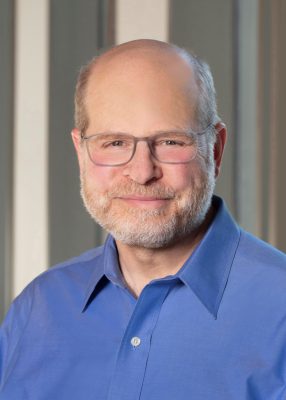
01.23.26 Dr. Jonathan Cagan – Carnegie Mellon University

AI to Enable Better Designs and Better Designing

Date: January 23, 2026; Time: 2:30 PM Location: PWEB 175

Abstract: AI as a means toward better design became an active area of research in the mid-1980s.  Yet today new understandings of how people design, coupled with new approaches to AI (through agents, optimization and deep learning), and more capable computing technologies have enabled better design tools and a better understanding of how AI can help people themselves design.  This talk will look at how AI can accelerate design as a tool, but also how AI can accelerate human teams in the act of designing.  The talk will examine the role of generative design, digital twins of designers, psychological constructs, and the confidence of humans with AI as a guide to new AI-based design methods.

Biographical Sketch: Jonathan Cagan is the David and Susan Coulter Head of Mechanical Engineering and George Tallman and Florence Barrett Ladd Professor at Carnegie Mellon University, with an appointment in Design.  Cagan also served as Interim Dean of the College of Engineering and Special Advisor to the Provost. Cagan co-founded the Integrated Innovation Institute for interdisciplinary design education at CMU, bringing engineering, design and business together to create new products and services.  Cagan’s research focuses on design automation and methods, problem solving, and medical technologies.  His work merges AI, machine learning, and optimization methods with cognitive- and neuro-science problem solving.  A Fellow of the American Society of Mechanical Engineers, Cagan has been awarded the ASME Design Theory and Methodology, Design Automation, Ruth and Joel Spira Outstanding Design Educator, and Computers and Information in Engineering Lifetime Achievement Awards.  He is also a Fellow of the American Association for the Advancement of Science.  A registered Professional Engineer, Cagan received his PhD from UC Berkeley, and has been on the faculty at CMU since 1990.
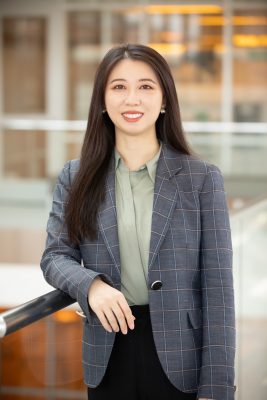
02.27.26 Dr. X. Shelly Zhang – University of Illinois at Urbana-Champaign

 Programmable multifunctional materials and structures: Design, realization, and validation

Date: February 27, 2026; Time: 2:30 PM Location: PWEB 175


Abstract: Programmable materials and structures hold great potential for various applications, such as robotics, biomedical devices, and civil structures. The rational design, physical realization, and validation of programmed behaviors in these systems play important roles in enabling functional devices. To encode desired mechanical functionality into structures, we propose a multi-material multi-objective topology optimization approach to inverse design composite structures that achieve complex target mechanical responses under large deformations. The multi-material framework simultaneously optimizes both the geometry, material heterogeneity, and architecture to achieve target behaviors and functionalities. A library of diverse designs is created, showcasing a wide range of precisely programmed nonlinear responses, such as multi-bulking and multi-plateau.

In general, the properties of materials and structures typically remain fixed after being constructed. To enable reprogrammable behaviors, we develop a multi-physics topology optimization approach to discover magneto-active and temperature-active materials that achieve tunable buckling and switchable shape morphing, controlled by magnetic fields and temperature fields, respectively. The obtained systems exhibit one response under one stimulus and switch to a distinct response by applying another stimulus.

To bridge the gap between simulation and fabrication, we explore multi-material manufacturing techniques, introduce advanced path generation methods, and develop direct ink writing (DIW) techniques to fabricate a suite of mechanical, magnetic, and thermal metamaterials and metastructures and experimentally validate their programmed behaviors. The excellent agreement among target, simulation, and experiment demonstrates that the proposed optimization-driven framework, when integrated with hybrid manufacturing techniques, has the potential to systematically design, inform, and create innovative multi-functional materials and structures for various engineering applications.

Biographical Sketch: Dr. Xiaojia Shelly Zhang is a David C. Crawford Faculty Scholar and Associate Professor at the Department of Civil and Environmental Engineering and the Department of Mechanical Science and Engineering at the University of Illinois at Urbana Champaign (UIUC). She directs the MISSION (MuIti-functional Structures and Systems desIgn OptimizatioN) Laboratory. Dr. Zhang holds B.S. and M.S. degrees from UIUC and a Ph.D. degree from Georgia Tech. Her research explores multi-physics topology optimization, inverse design, stochastic learning algorithms, and additive manufacturing to develop multi-functional, sustainable, and resilient materials, structures, and robots for applications at different scales. She is the recipient of the National Science Foundation CAREER Award (2021), the ASME Journal of Applied Mechanics Award (2022), the DARPA Young Faculty Award (2022), the AFOSR Young Investigator Award (2023), the Leonardo da Vinci Award from ASCE (2024), the DARPA Director’s Fellowship (2024), UIUC Campus Distinguished Promotion Award (2025), the Thomas J.R. Hughes Young Investigator Award from ASME (2025), the ASME Henry Hess Early Career Publication Award (2025), the Haftka Young Investigator Award from International Society for Structural and Multidisciplinary Optimization (2025). Dr. Zhang serves on the Executive Committee of the International Society of Structural and Multidisciplinary Optimization (ISSMO) and is a Review Editor for the Journal of Structural and Multidisciplinary Optimization and an Associate Editor for the Journal of Applied Mechanics.