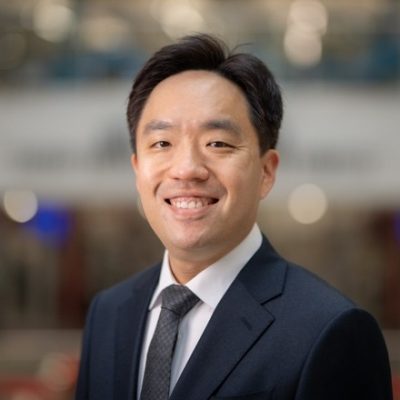
02.27.26 Dr. X. Shelly Zhang – University of Illinois at Urbana-Champaign

Programmable multifunctional materials and structures: Design, realization, and validation
Date: February 27, 2026; Time: 2:30 PM Location: PWEB 175
Abstract: Programmable materials and structures hold great potential for various applications, such as robotics, biomedical devices, and civil structures. The rational design, physical realization, and validation of programmed behaviors in these systems play important roles in enabling functional devices. To encode desired mechanical functionality into structures, we propose a multi-material multi-objective topology optimization approach to inverse design composite structures that achieve complex target mechanical responses under large deformations. The multi-material framework simultaneously optimizes both the geometry, material heterogeneity, and architecture to achieve target behaviors and functionalities. A library of diverse designs is created, showcasing a wide range of precisely programmed nonlinear responses, such as multi-bulking and multi-plateau.
In general, the properties of materials and structures typically remain fixed after being constructed. To enable reprogrammable behaviors, we develop a multi-physics topology optimization approach to discover magneto-active and temperature-active materials that achieve tunable buckling and switchable shape morphing, controlled by magnetic fields and temperature fields, respectively. The obtained systems exhibit one response under one stimulus and switch to a distinct response by applying another stimulus.
To bridge the gap between simulation and fabrication, we explore multi-material manufacturing techniques, introduce advanced path generation methods, and develop direct ink writing (DIW) techniques to fabricate a suite of mechanical, magnetic, and thermal metamaterials and metastructures and experimentally validate their programmed behaviors. The excellent agreement among target, simulation, and experiment demonstrates that the proposed optimization-driven framework, when integrated with hybrid manufacturing techniques, has the potential to systematically design, inform, and create innovative multi-functional materials and structures for various engineering applications.
Biographical Sketch: Dr. Xiaojia Shelly Zhang is a David C. Crawford Faculty Scholar and Associate Professor at the Department of Civil and Environmental Engineering and the Department of Mechanical Science and Engineering at the University of Illinois at Urbana Champaign (UIUC). She directs the MISSION (MuIti-functional Structures and Systems desIgn OptimizatioN) Laboratory. Dr. Zhang holds B.S. and M.S. degrees from UIUC and a Ph.D. degree from Georgia Tech. Her research explores multi-physics topology optimization, inverse design, stochastic learning algorithms, and additive manufacturing to develop multi-functional, sustainable, and resilient materials, structures, and robots for applications at different scales. She is the recipient of the National Science Foundation CAREER Award (2021), the ASME Journal of Applied Mechanics Award (2022), the DARPA Young Faculty Award (2022), the AFOSR Young Investigator Award (2023), the Leonardo da Vinci Award from ASCE (2024), the DARPA Director’s Fellowship (2024), UIUC Campus Distinguished Promotion Award (2025), the Thomas J.R. Hughes Young Investigator Award from ASME (2025), the ASME Henry Hess Early Career Publication Award (2025), the Haftka Young Investigator Award from International Society for Structural and Multidisciplinary Optimization (2025). Dr. Zhang serves on the Executive Committee of the International Society of Structural and Multidisciplinary Optimization (ISSMO) and is a Review Editor for the Journal of Structural and Multidisciplinary Optimization and an Associate Editor for the Journal of Applied Mechanics.
03.06.26 Dr. Morad Behandish – UConn

Breaking the one-material-per-part paradigm in engineering design
Date: March 6, 2026; Time: 2:30 PM Location: PWEB 175
Abstract: Today’s one-material-per-part paradigm leads to vulnerabilities when highly engineered components demand locally optimized properties. Design, manufacturing, and qualification of parts made of functionally-graded materials, on the other hand, are hindered by the lack of reliable methods for on-demand discovery and high-throughput testing of new materials. The conventional test methods, based on decades-old techniques, are slow, costly, and not scalable to graded materials. Moreover, the existing part design tools are unable to explore material design spaces as material selection is often treated as a fixed input. In this talk, I will show how we bridge this divide using a novel material-integrated part design framework, informed by material feasibility, criticality, and performance criteria provided by data-driven materials informatics. To collect data on a range of advanced mechanical properties, we use high-resolution digital image correlation (HR-DIC) and AI-based methods to predict long-term macroscopic behavior (e.g., fatigue and creep properties) from short-term microscopic observables, with a current focus on metallic alloys. Together, these capabilities unlock breaking new grounds in co-design of geometry and materials, qualification for advanced manufacturing, and optimization for supply chain sustainability.
Biographical Sketch: Morad Behandish joined our school as an Associate Professor in Spring 2026. Before returning to academia, he spent several years leading cross-disciplinary research in computational design and digital manufacturing in industry, serving in research manager and director roles at SRI and PARC. Prior to joining PARC, he did a Postdoc on cyber-manufacturing at ICSI of UC Berkeley in 2017 and received a Ph.D. in Mechanical Engineering and a M.Sc. in Computer Science and Engineering from UConn in 2016. His research has been funded by DARPA, DoD, DoE, and commercial partners with a focus on geometric and physical modeling to support design automation, digital materials, and advanced manufacturing. This talk is based on his recent research as a PI on the DARPA METALS program in collaboration with UIUC and UCSD.
04.24.26 Dr. Shiyu Zhou – University of Wisconsin-Madison

Deep Learning Enabled Modeling and Condition-Based Maintenance of Smart and Connected Systems
Date: April 24, 2026; Time: 2:30 PM Location: PWEB 175
Abstract: Due to the fast development of sensing and information technology, many modern engineering systems, such as manufacturing and logistics systems, have become data-rich. The unprecedented data availability, combined with ever-growing computational power, creates unprecedented opportunities for system modeling and decision-making. In this presentation, new deep learning enabled modeling approaches for system degradation will be introduced. The approach features an integration of deep neural networks and the classical hidden Markov structure. As a result, the proposed modeling approach has excellent interpretability, scalability, and flexibility. In addition, a condition-based maintenance strategy for a large-scale multiple-component system is presented. The advantageous features of the developed methods are demonstrated through numerical studies and real-world case studies. Thoughts on potential research opportunities exploiting the ever-growing data-rich engineering environment will be shared as well.
Biographical Sketch: Shiyu Zhou is the David H. Gustafson Department Chair and Vilas Distinguished Achievement Professor of the Department of Industrial and Systems Engineering at the University of Wisconsin-Madison. His research focuses on data-driven modeling, monitoring, diagnosis, and prognosis for engineering systems with particular emphasis on manufacturing and after-sales service systems. He has established methods for modeling, analysis, and control of Internet-of-Things (IoT) enabled smart and connected systems, variation modeling, analysis, and reduction for complex manufacturing processes, and process control methodologies for emerging nano-manufacturing processes. He is a recipient of CAREER Award from the National Science Foundation and multiple Best Paper Awards. He is a fellow of IISE, ASME, and SME.